
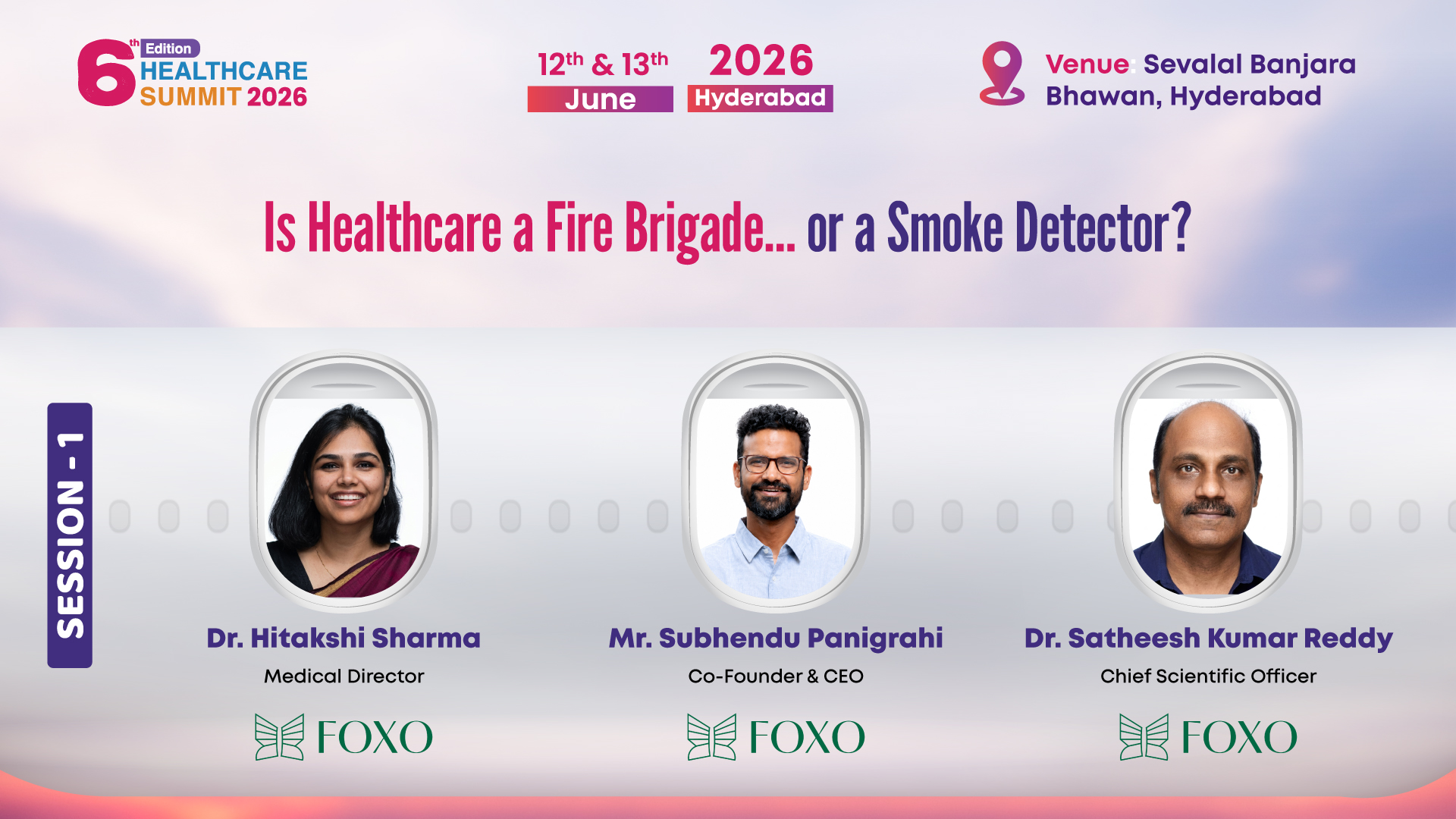
Is Healthcare a Fire Brigade… or a Smoke Detector?
For decades, healthcare systems across the world have largely operated like fire brigades – responding when disease appears, symptoms worsen, or crises emerge. Yet advances in diagnostics, biomarkers, artificial intelligence, genomics, and predictive analytics are creating an opportunity to fundamentally rethink healthcare delivery. What if healthcare could identify risks before disease develops? What if prevention became the primary focus rather than treatment?
This session explores one of the most important transformations in modern medicine: the shift from reactive care to predictive health management.
The discussion brings together experts working at the forefront of preventive healthcare, longevity science, precision diagnostics, and systems biology.
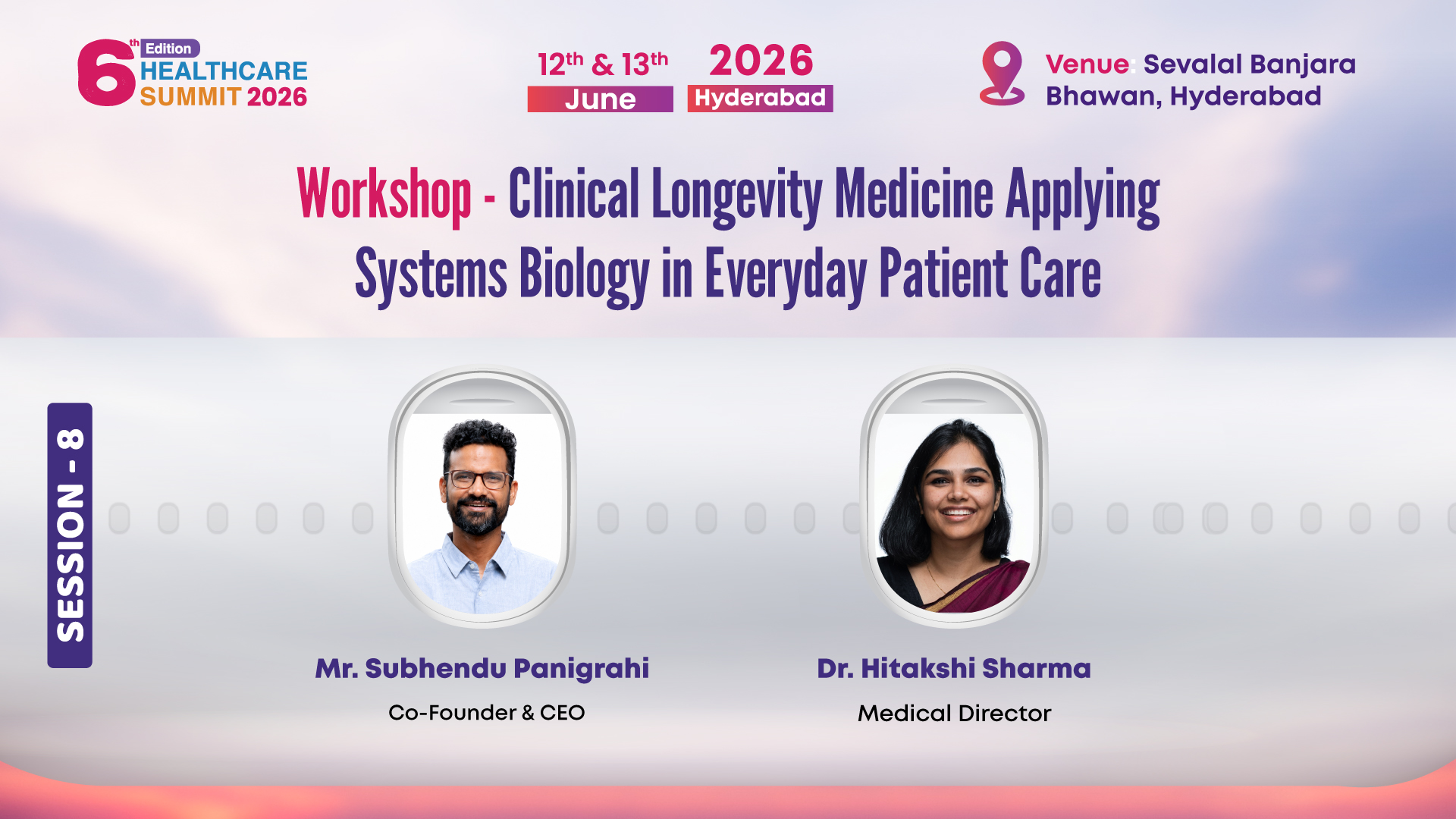
Dr. Hitakshi Sharma, Medical Director and advocate of longevity-focused healthcare, has been actively involved in translating emerging scientific insights into practical preventive healthcare models. Her work emphasizes early risk detection, personalized interventions, and improving long-term health outcomes through evidence-based prevention.
Mr. Subhendu Panigrahi, Co-Founder and CEO, brings an innovation and technology perspective, exploring how data-driven health ecosystems, digital platforms, and preventive care technologies can help individuals understand health risks before disease manifests.
Joining them is Dr. Satheesh Kumar Reddy, Chief Scientific Officer and healthcare innovation leader, whose work bridges scientific research, translational medicine, and practical healthcare applications.
The session will explore how healthcare can evolve from episodic treatment toward continuous health monitoring and risk prediction. Topics include advanced biomarkers, metabolic health assessment, biological aging indicators, wearable technologies, artificial intelligence, precision diagnostics, and longitudinal health tracking.
A key theme will be whether healthcare organizations are prepared for this transition. While technology now enables unprecedented health visibility, many healthcare systems remain structured around disease treatment rather than prevention. The panel will discuss the policy, economic, clinical, and behavioral changes required to support this transformation.
For clinicians, healthcare leaders, employers, insurers, researchers, and policymakers, this session offers valuable insights into the future of healthcare delivery.
The central question remains both simple and profound: Should healthcare wait for disease to arrive – or should it detect the first signs of risk before the fire ever starts?